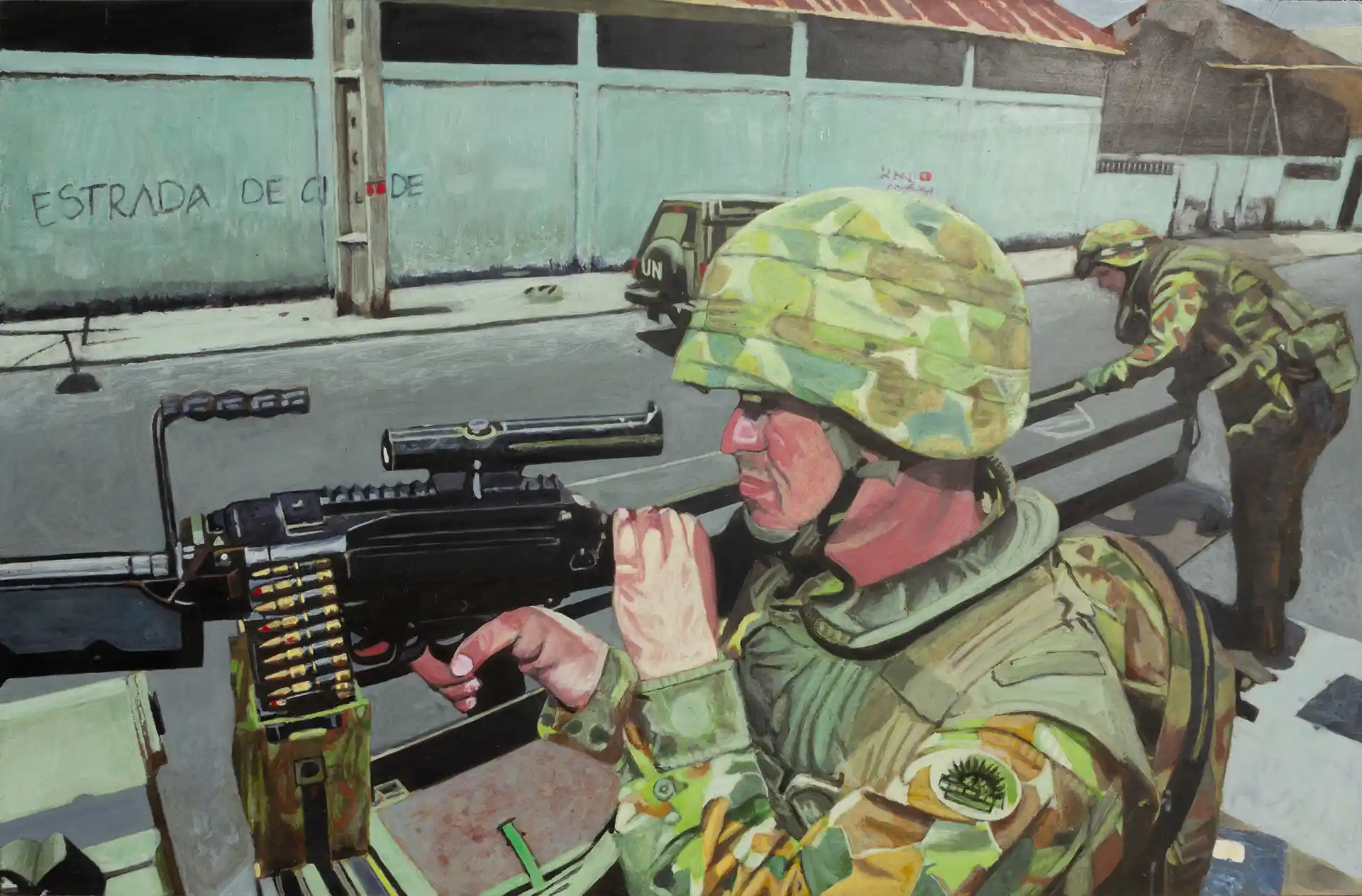
Dimensions: 50x70cm
Painted: 2002
Materials: Acrylic on MDF board
Private collection
The story behind INTERFET
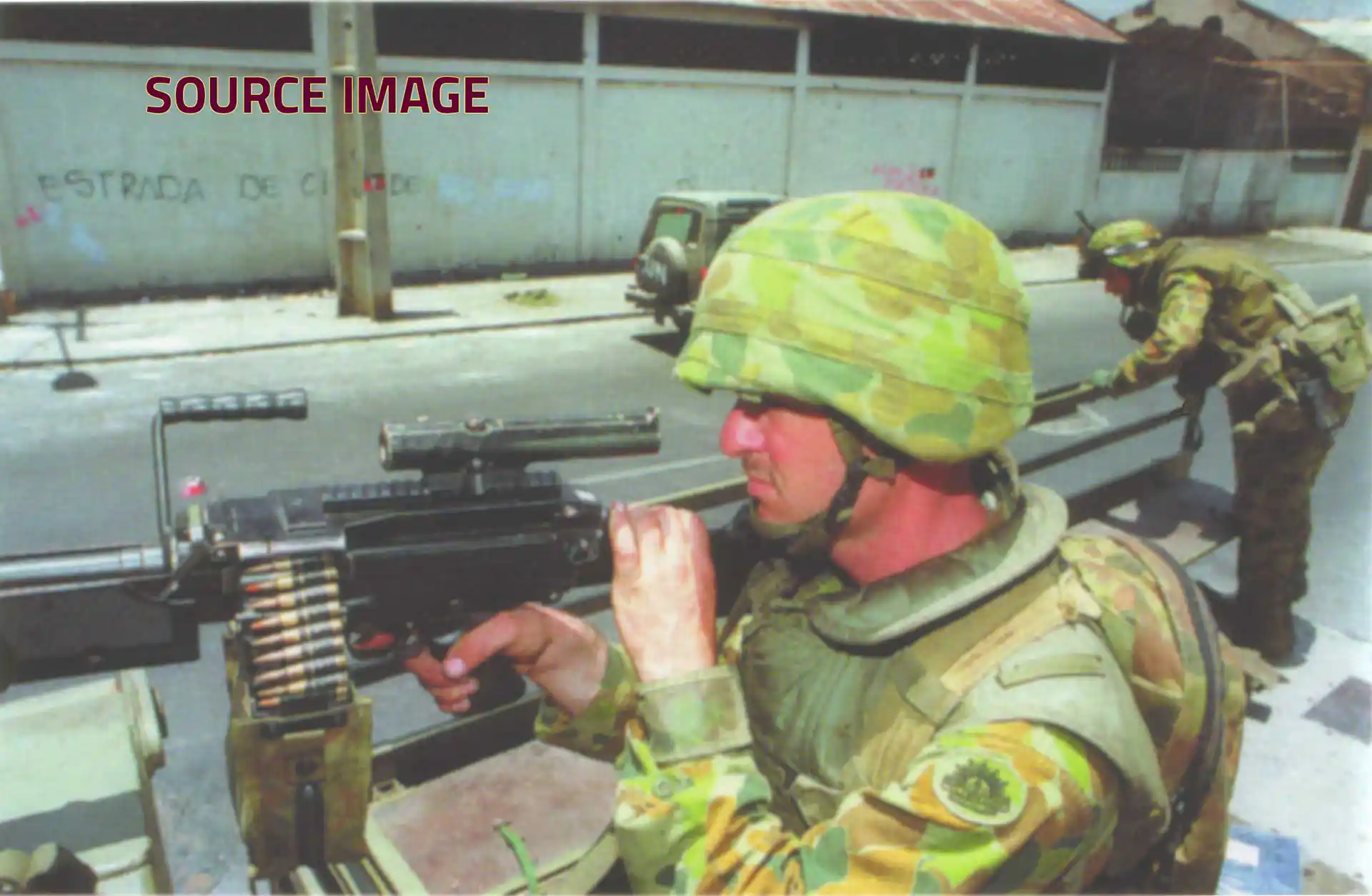
INTERFET was the multinational peacekeeping force led by Australia and deployed to East Timor in 1999. Its purpose was to protect the East Timorese people from the pro-Indonesian militias who responded to the independence vote with systematic violence. The source image came from a book documenting that mission.
The painting shows a sunburnt Australian soldier manning a machine gun on top of a vehicle as they patrol the streets of Dili. A second soldier stands further back. A UN vehicle is visible in the background. On the wall behind them, partially obscured, the words Estrada de Cidade — city road.
Photorealism is often reduced to a demonstration of technical skill — shiny surfaces, reflective chrome, visual tricks that announce themselves as the point. That was never the intention here. The subject matter carries the weight. A young Australian soldier in a flak jacket and camouflage helmet, belted ammunition in his hands, on a street in a city that had just voted its way to independence and was being made to pay for it.
War is not something to celebrate. But this painting is not an anti-war statement either. It is an acknowledgement that the military has a genuine and necessary purpose — and that East Timor was one of the rare occasions when armed force was deployed for entirely the right reasons. A small nation exercised its democratic right and was met with murderous reprisal. These soldiers went there to stop it.
All too often that is not why armies are sent. Here it was.
The painting was given to someone who served in East Timor and wanted it. That’s reason enough.
This painting has an abstract painting (Jungle 1) on the reverse side.
Source image of realism painting INTERFET